
The Glucose Lens
Fourteen days of continuous glucose data, read with our clinical dietician.
Led by our clinical dietician. Measured at JEH: Baseline, then a daily glucose curve, then the trend over 14 days.
What it supports
- ✓ Blood sugar awareness and prediabetes
- ✓ Type 2 diabetes, alongside your doctor
- ✓ Energy crashes and cravings
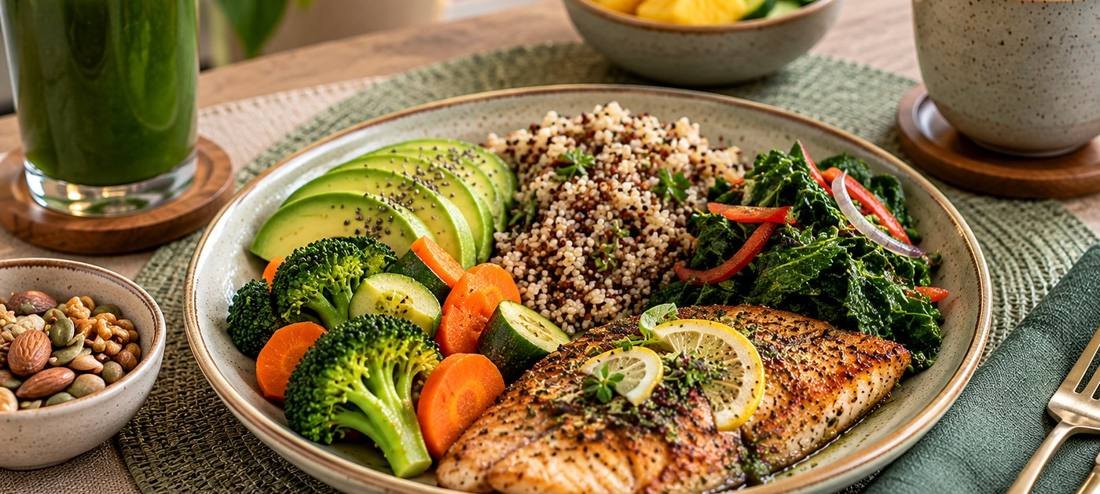
- ✓ Food choices built on your own data
What you may notice
“A clear daily picture of how your food, sleep and stress move your numbers.”
₦180,000
Sensor, fitting & app
Bookings are requests, subject to practitioner availability. We confirm every time on WhatsApp.
How a session runs
Fitting
We fit the LinX sensor on your upper arm. It takes a few minutes and most people barely feel it.
App setup
We set up the app on your phone so you can watch your readings live.
Live normally for 14 days
Eat, move and sleep as usual, and note meals in the app.
Review
Our clinical dietician reads your curve with you and turns it into a plan.
Before you come
- •Bring your phone (the app runs on it).
- •Wear a top with sleeves that roll up easily.
Afterwards
- •Keep the sensor dry for the first hour; you can shower with it after that.
- •If the sensor comes loose, message us on WhatsApp.
Often chosen for
Tell us before you book
If any of these apply, our medical doctor will check whether this session suits you, or suggest an alternative:
- ⚠ Open wounds or recent stitches
If you take insulin or glucose-lowering medication, keep taking it as prescribed; the sensor does not change your treatment.
Pairs well with
Questions
Does the sensor hurt?
Can I shower and exercise?
Do I need diabetes to use it?
Research
These studies are shared for context. They may have used different equipment, settings or groups of people from a session at JEH, and they are not a promise of results.
Hall H, Perelman D, Breschi A, et al. · PLoS Biology, 2018
Continuous glucose monitoring in adults, including people without diabetes, showed very different glucose patterns between individuals.
Zeevi D, Korem T, Zmora N, et al. · Cell, 2015
Studied how blood sugar responses to the same meals vary from person to person, using continuous glucose monitoring.